Printful Publishes Eight-Step Guide to Launching an Online Clothing Brand
The resource covers business models, product selection, pricing with a 30–50% margin, and marketing as fashion
Press Release Disclaimer: This is a press release distributed through the XPR Media network. It has not been independently verified by our newsroom.
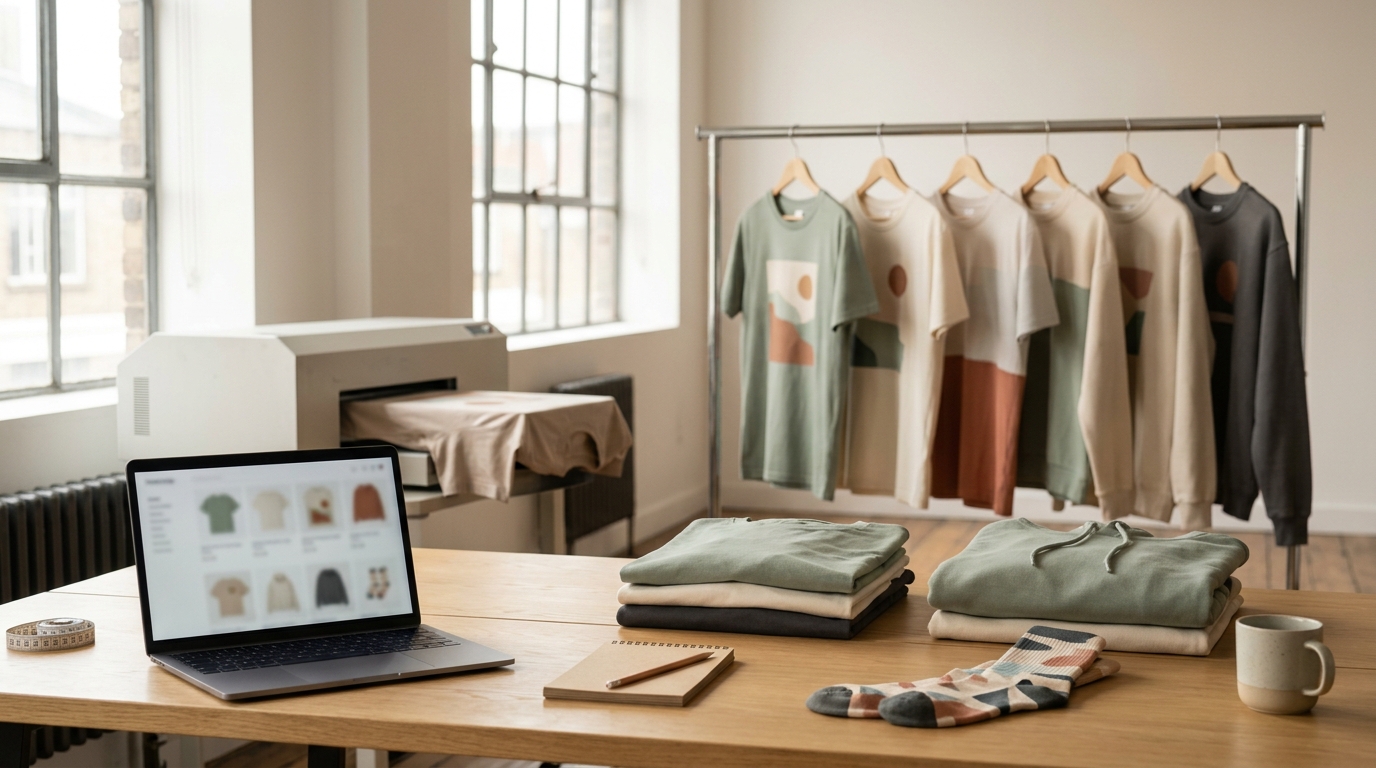

The resource covers business models, product selection, pricing with a 30–50% margin, and marketing as fashion ecommerce heads toward $1.2 trillion by 2030
CHARLOTTE, NC, UNITED STATES, October 20, 2026 /EINPresswire.com/ — Printful, a leading global print-on-demand and fulfillment company, has released a step-by-step guide for entrepreneurs who want to launch a clothing brand online without holding inventory. The resource breaks the process into eight stages, from choosing a niche and a business model to pricing, search optimization, and scaling, and points to a growing market: the guide cites projections that global fashion ecommerce sales will surpass $1.2 trillion by 2030, while the US print-on-demand market is forecast to grow at a 24.4% compound annual rate over the same period.
Choosing a Model Before Choosing a Product
According to the guide, the first decision a new founder faces is not what to sell but how to fulfill it. Printful compares three models side by side. Print on demand lets sellers upload designs and pay only when a customer orders, with no upfront stock, which the guide positions as the best fit for designers and first-time founders. Dropshipping offers fast setup and low financial risk but little differentiation and thin margins. Wholesale delivers higher margins and full control at the cost of significant upfront inventory, warehousing, and returns handling. The resource also recommends writing a business plan, forming a legal entity, and keeping a separate bank account from day one.
The guide then turns to sales channels, weighing ecommerce platforms such as Shopify, Wix, WooCommerce, and BigCommerce against marketplaces like Etsy, Amazon, and eBay. Platforms give full control over branding and pricing in exchange for monthly fees and setup effort, while marketplaces offer a built-in audience alongside heavy competition. For small catalogs and test launches, Printful notes that standalone options such as its own Quick Store can get a shop live quickly with minimal cost. Readers who want the full breakdown can find it in Printful’s guide to the basics of starting an online clothing store.
Picking Products Shoppers Are Already Searching For
Printful advises founders to start small, launching with five to ten products that match their audience and margin goals, and to choose those products by demand rather than instinct. The resource suggests thinking in the search terms customers actually type, reverse-engineering bestselling listings for repeated title and tag words, and using Google Trends filtered to the past twelve months to separate steady growth from short-lived spikes. It also explains the four main fulfillment techniques, noting that direct-to-garment printing suits cotton and detailed full-color designs, direct-to-film works on blends and dark colors, sublimation is favored for activewear, and embroidery holds up best on simple logos for hats, polos, and jackets.
On design, the guide covers free and paid software, how to digitize hand-drawn artwork at 300 DPI or higher, and how to brief a freelancer. It highlights Printful’s free Design Maker, which includes a library of clipart, fonts, and illustrations and lets sellers add curved text, remove backgrounds, and preview artwork on true-to-life mockups before listing anything. Sellers who want to round out an apparel line with accessories can apply the same workflow to products such as custom socks, which require no minimum order.
Pricing, Store Setup, and Growth
The pricing section gives founders a concrete formula: add up product, printing, shipping, and platform costs, then build in a 30–50% profit margin. As an example, the guide notes that a $13 fulfillment cost supports a retail price of $20 to $25, and that charm pricing such as $24.99 can lift conversions while round numbers signal premium positioning. For marketing, the resource recommends building organic traction on Instagram, TikTok, and Pinterest before paying for ads, starting an email list immediately given that brands earn an average of $36 to $42 for every $1 spent on email, and partnering with micro-influencers as US creator spending is projected to top $13.7 billion by 2027.
“Most people who want to start a clothing brand don’t lack ideas, they lack a clear order of operations. This guide gives them one, without asking them to buy inventory before they know what sells,” said Davis Sarmins, Director of Growth Marketing at Printful.
The guide closes with scaling advice, including re-releasing winning designs in new colors, testing alternate print placements, and retiring slow sellers. Founders evaluating fulfillment partners can also review Printful’s print-on-demand comparison, which sets its production network, catalog, and pay-per-order model against other providers. The full guide is available now on the Printful Blog.
About Printful
Printful is a global ecommerce platform and on-demand production partner that helps entrepreneurs and businesses create and sell custom products online. Through in-house production, fulfillment services, ecommerce integrations, and design tools, Printful enables brands to launch and grow without holding inventory.
Maria Kennedy
Printful
email us here
Visit us on social media:
LinkedIn
Instagram
Facebook
YouTube
TikTok
X
Legal Disclaimer:
EIN Presswire provides this news content “as is” without warranty of any kind. We do not accept any responsibility or liability
for the accuracy, content, images, videos, licenses, completeness, legality, or reliability of the information contained in this
article. If you have any complaints or copyright issues related to this article, kindly contact the author above.

Media gallery